
Brazilian Jiu-Jitsu in Memphis: What to Expect in Your First Class
A walk-through of your first Brazilian Jiu-Jitsu class in Memphis — what to wear, class structure, tapping, rolling, and what instructors wish beginners knew.
By Coach JD Shackelford • July 7, 2026
Signing up for your first Brazilian Jiu-Jitsu class is one of those decisions that feels bigger in your head than it actually turns out to be. Maybe you've watched a few MMA fights, heard a coworker rave about their gym, or decided it's finally time to learn real self-defense. Whatever brought you here, the biggest hurdle almost every new student faces isn't the training itself — it's walking through the door for the first time.
If you're searching for jiu-jitsu classes in Memphis and wondering what that first class actually looks like, this guide walks you through everything: what to wear, how the class is structured, what "rolling" really means, and why almost everyone who tries it says the same thing afterward — "that was nothing like I expected."
Before You Even Step on the Mat
Most Memphis BJJ academies make the first-class process far easier than people anticipate. You typically don't need to own any gear, sign a long-term contract, or have any prior experience. Reputable schools understand that beginners are sizing up the gym just as much as the gym is welcoming them, so the onboarding process is usually designed to be low-pressure.
What to wear: For your very first class, athletic clothes are almost always fine — think a rash guard or fitted t-shirt, athletic shorts or leggings without pockets or zippers, and bare feet (shoes aren't worn on the mats). Avoid anything with pockets, zippers, or metal clasps, since these can catch fingers and toes during grappling exchanges and cause injury. If the class trains "gi" jiu-jitsu (the traditional kimono-style uniform), most academies will either loan you a gi for your trial class or simply have you observe the uniform requirements before your second visit. If it's a no-gi class, athletic wear like what you'd bring to a wrestling practice works well.
What to bring: A water bottle, a small towel, and a willingness to tap out early and often (more on that below) are really all you need. Flip-flops or sandals for walking to and from the restroom or water fountain are common gym etiquette, since bare feet shouldn't touch outside floors before stepping back onto the mats.
Arrive early. Most Memphis academies encourage new students to arrive 15–20 minutes before class to fill out a waiver, get a quick tour of the facility, and meet the instructor. This is also a great opportunity to mention any injuries, physical limitations, or concerns so your instructor can pair you with an appropriately experienced training partner and keep an eye on you during live training.
The Structure of a Typical Class
While every academy has its own rhythm, most Brazilian Jiu-Jitsu classes in Memphis follow a fairly consistent structure that makes the experience predictable and approachable, even for complete beginners.
1. Warm-Up (10–15 minutes)
Class typically opens with a dynamic warm-up designed to prepare your body for the specific movements used in jiu-jitsu — hip escapes (often called "shrimping"), forward and backward rolls, bridging drills, and various footwork patterns. This isn't your average gym warm-up; it's often the first time new students realize how much full-body coordination the sport demands. Don't worry if you feel clumsy here. Every current black belt in the room once felt exactly the same way during their first warm-up.
2. Technique Instruction (20–30 minutes)
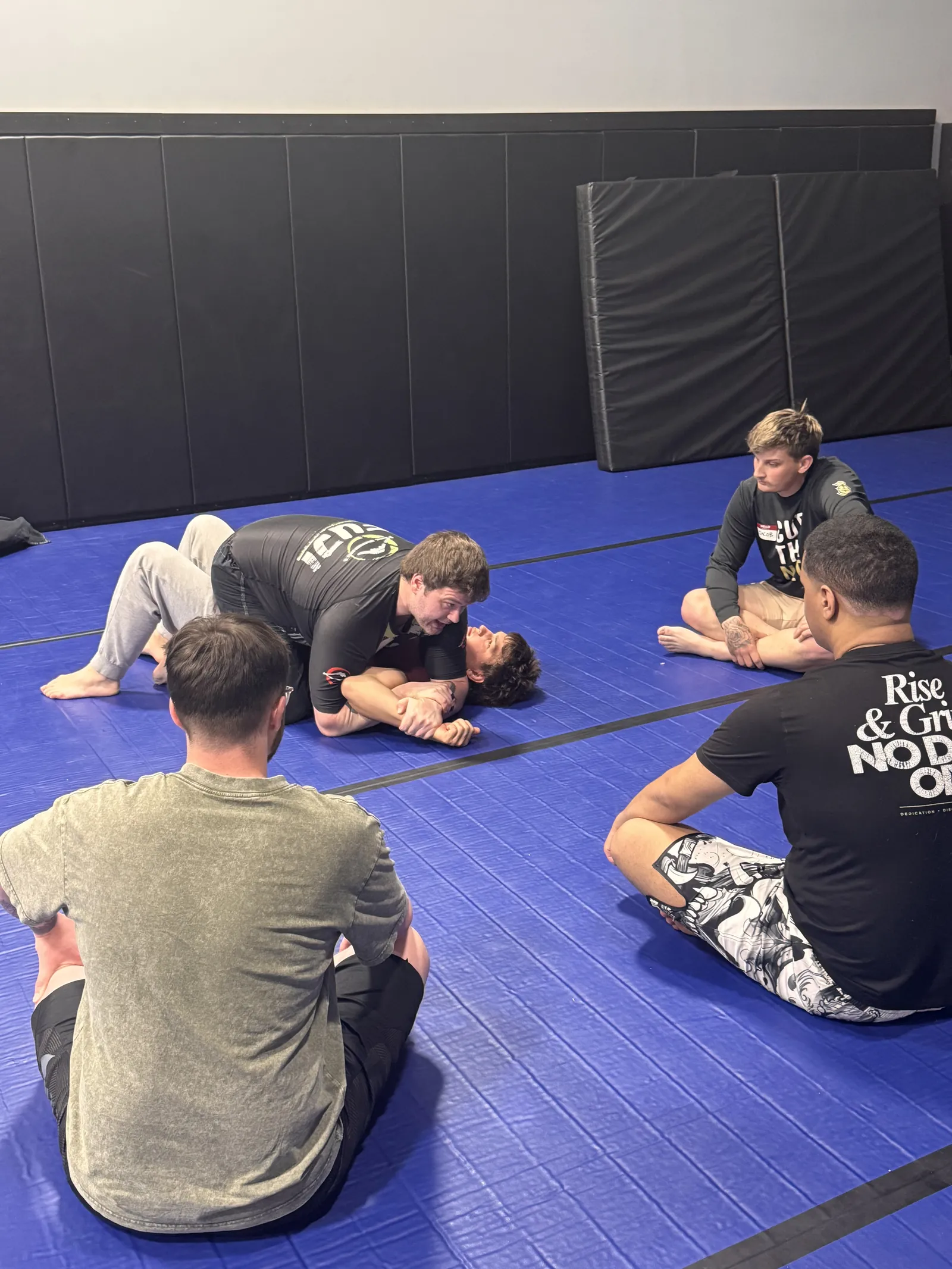
This is the heart of a jiu-jitsu class. The instructor will demonstrate one or two techniques — perhaps an escape from being pinned, a basic takedown, or a fundamental submission — breaking down each detail step by step. Students then pair up and drill the technique repeatedly on each other at a slow, cooperative pace. Nobody is resisting during this phase; the goal is pure repetition to build muscle memory.
For your first class, expect to be paired with a more experienced student or directly with the instructor, who will patiently walk you through the movements. Jiu-jitsu has a deeply ingrained culture of teaching, and experienced practitioners generally take real pride in helping beginners understand the material — this isn't a sport where veterans expect newcomers to simply figure it out alone.
3. Live Training / "Rolling" (10–20 minutes, often optional for first-timers)
This is the part most beginners are simultaneously excited and nervous about. "Rolling" refers to live, semi-resistant or fully resistant sparring, where two practitioners attempt to apply techniques on each other in real time. It's often compared to a physical chess match — a slow, strategic exchange of position and control rather than the frantic scramble people sometimes picture from movies or MMA broadcasts.
Most Memphis academies won't push a brand-new student into full live rolling on day one, and many will explicitly ask if you'd like to sit this part out and simply observe. If you do roll, you'll almost always be paired with someone experienced enough to control the pace, roll at a fraction of their actual ability, and prioritize your safety and comfort over "winning" the exchange. There's an unwritten rule in jiu-jitsu gyms everywhere, Memphis included, that veterans go easy on brand-new students — partly out of courtesy, and partly because a scared-off beginner never comes back.
4. Cool-Down and Closing
Classes typically end with a brief cool-down, sometimes a short talk from the instructor, and a customary bow or handshake line where students thank their training partners and the instructor. This closing ritual reflects jiu-jitsu's traditional roots and reinforces the culture of mutual respect that defines most academies.
Understanding "Tapping Out" (And Why It's Nothing to Fear)
If there's one concept that intimidates new students more than any other, it's the idea of submissions — joint locks and chokes that, if fully applied, could cause injury or unconsciousness. Here's the important context: in training, submissions are never intended to actually hurt you. The entire system is built around a simple safety mechanism called "tapping out."
When you feel a submission applied to the point of genuine discomfort — not pain, but the clear sense that the technique is working — you simply tap your hand (or the mat, or verbally say "tap") and your partner immediately releases the hold. This isn't a sign of weakness or failure; it's simply how the sport works, at every belt level, every single day. Black belts tap to other black belts constantly. Tapping is jiu-jitsu's built-in reset button, and understanding this upfront removes most of the fear new students bring into their first class.
Instructors at reputable Memphis academies will explain this concept clearly before any live training begins, and your training partners will be attentive to your taps, especially as a beginner.
The Physical and Mental Reality of Your First Class
Most first-time students are surprised by two things: how tired they get, and how mentally engaging the class turns out to be.
Physically, even a class built around slow, technical drilling works muscles most people rarely use — grip strength, hip mobility, and core stabilization chief among them. It's common to wake up the next day sore in unexpected places: forearms, neck, and hips especially. This is completely normal and tends to fade within the first few weeks as your body adapts to the new movement patterns. If getting in shape is part of the appeal, our BJJ for Fitness & Weight Loss page breaks that side down in more detail.
Mentally, jiu-jitsu demands total presence in a way few other activities do. You genuinely cannot think about your inbox or your grocery list while trying to remember which arm goes where during an escape sequence. Many students describe this forced mental engagement as one of the most unexpectedly appealing aspects of their first class — a complete, all-consuming break from daily stress. It's a big reason we treat BJJ as stress relief, not just exercise.
It's also completely normal to feel a mix of excitement and vulnerability. Being physically controlled by another person, even in a safe and cooperative setting, is an unfamiliar experience for most adults. This feeling typically fades quickly as trust builds with training partners and instructors over the following weeks.
What Memphis Instructors Wish First-Timers Knew
Instructors across Memphis-area academies tend to echo similar advice for brand-new students:
You won't look "good" on day one, and that's completely fine. Everyone in the room, including the instructor, was once a nervous, uncoordinated white belt.
Ask questions. Jiu-jitsu has its own vocabulary and etiquette that can feel like a lot to absorb at once. Instructors and training partners generally welcome questions rather than viewing them as a burden.
Tap early, tap often. There's no reward for holding out against a submission a moment longer than necessary. Tapping early preserves your body for years of future training.
Come back at least two or three more times before deciding. The first class is often disorienting simply because everything is new. Most people who stick with jiu-jitsu describe a noticeable shift in comfort and understanding by their third or fourth class.
Don't compare yourself to more experienced students. Progress in jiu-jitsu is measured in months and years, not single classes. Comparing your first day to someone else's third year is a recipe for unnecessary discouragement.
Choosing the Right First Class in Memphis
If you haven't settled on an academy yet, a few things are worth considering as you look at Memphis jiu-jitsu classes:
Beginner-friendly scheduling. Look for gyms that offer dedicated fundamentals or beginner classes rather than throwing new students directly into an advanced curriculum. Our BJJ for Adults & Beginners program is built exactly that way, and the full weekly class schedule shows what a real training week looks like.
A trial class or free week. Most reputable Memphis academies offer some version of a free trial, letting you experience the environment and coaching style before committing financially.
Instructor accessibility. During your visit, notice whether the instructor takes time to personally check in with new students, rather than delegating entirely to more senior members.
Gym culture. A well-run academy should feel welcoming rather than intimidating — safety-conscious, communicative, and genuinely invested in retaining beginners rather than just experienced competitors. Women who'd feel more comfortable starting in a women-focused environment can also look at BJJ for Women.
Final Thoughts
Your first Brazilian Jiu-Jitsu class in Memphis will almost certainly be more approachable, more welcoming, and more mentally engaging than you expect. The techniques will feel foreign, the soreness will be real, and the vocabulary will take some getting used to — but the overwhelming majority of first-time students walk away from their first class already looking forward to their second. Jiu-jitsu has a long-standing culture of taking care of its newest members, and Memphis's growing BJJ community is no exception. The hardest part of your jiu-jitsu journey is almost always that first step through the door — everything after that tends to take care of itself.
Ready to take that step? Your first class at Shackelford's MMA Center is a free trial — no pressure, no sales pitch.
Your Free Trial Class
One full class, free. No pressure, no commitment.
Ready to train near Memphis?
Your first BJJ class at Shackelford's MMA Center is free. No contract, no pressure.