
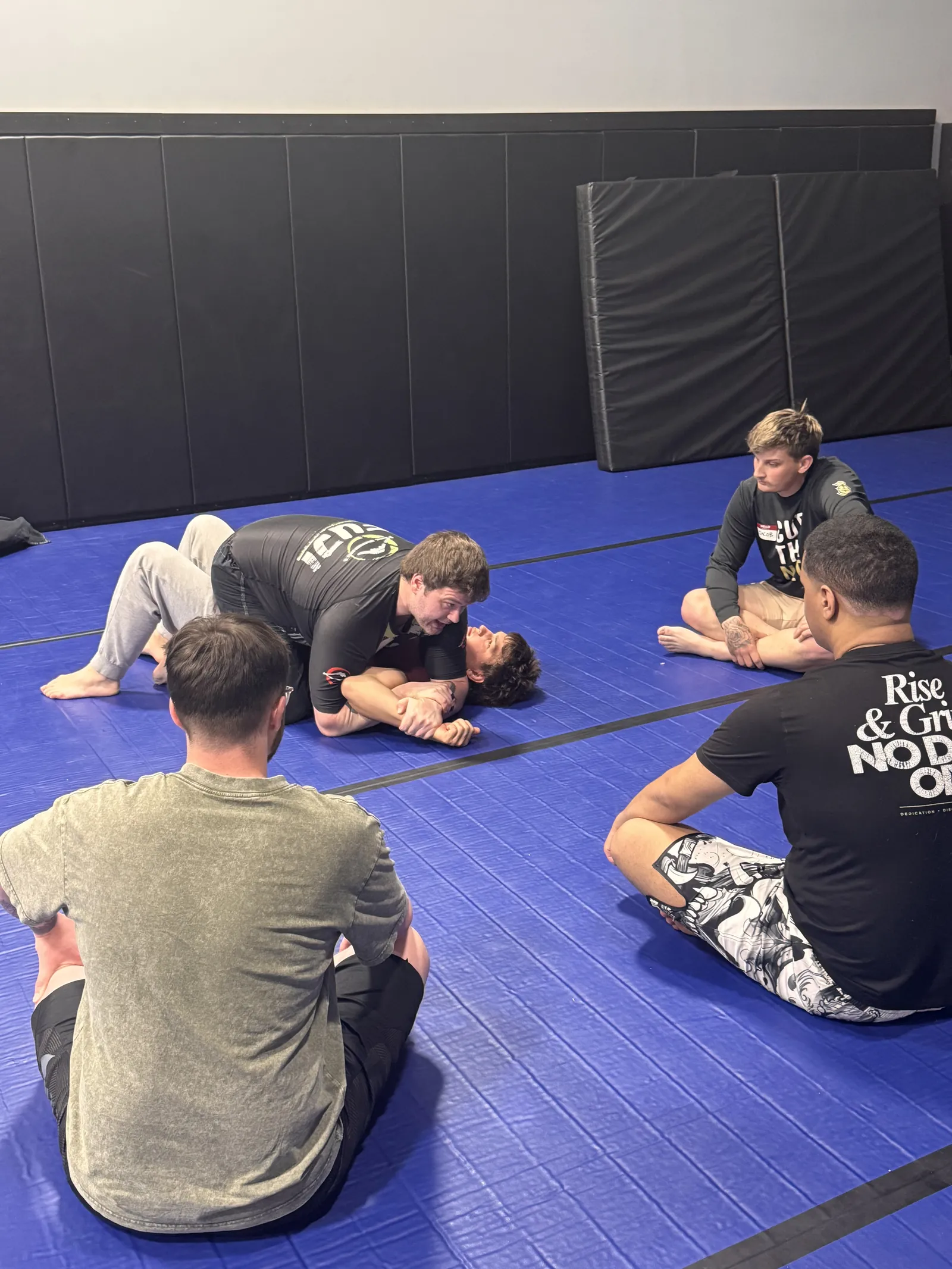
Top 5 Benefits of Training Jiu-Jitsu in Memphis for Adults Over 30
Five reasons jiu-jitsu is one of the best fitness, self-defense, and stress-relief pursuits for Memphis-area adults over 30 — and why age isn't the barrier most people think.
By Coach JD Shackelford • July 6, 2026
Walk into any Brazilian Jiu-Jitsu gym in Memphis on a Tuesday evening and you'll notice something: the mats aren't just full of twenty-something competitors chasing medals. They're full of accountants, nurses, contractors, teachers, and parents in their 30s, 40s, and 50s — many of whom never set foot on a mat before their first class. That's not a coincidence. Jiu-jitsu has quietly become one of the most popular fitness and self-improvement pursuits for adults over 30 in Memphis, and for good reason.
Unlike high-impact sports that punish aging joints or gym routines that feel repetitive after a few months, jiu-jitsu offers a rare combination of physical conditioning, mental engagement, and real-world practicality that keeps adults coming back for years — not weeks. If you're considering stepping onto the mats at a Memphis jiu-jitsu academy but wondering whether you're "too old to start," this guide breaks down the five biggest benefits you can expect, and why age is far less of a barrier than most people assume.
1. Full-Body Fitness Without the Joint-Pounding Wear of Traditional Workouts
One of the most common concerns adults over 30 have about starting a new sport is impact. Years of running, contact sports, or simply sitting at a desk can leave knees, backs, and shoulders more fragile than they were at 22. Jiu-jitsu, when trained smartly, is remarkably joint-friendly compared to activities like running, basketball, or CrossFit-style training.
Because BJJ is a grappling art practiced on padded mats, most of the movement happens in controlled, low-impact positions — rolling, hip escapes, and positional transitions rather than repetitive pounding on hard surfaces. That doesn't mean it's easy. A single five-minute round of live rolling ("sparring") can leave even a seasoned athlete gassed, because jiu-jitsu demands full-body engagement: core stability, grip strength, hip mobility, and cardiovascular endurance all at once.
For Memphis adults balancing careers and family responsibilities, this translates into an efficient workout. A single one-hour class typically includes a dynamic warm-up, technique drilling, and live rolling — hitting strength, flexibility, and cardio in one session instead of requiring separate trips to the gym. Many students report noticeable improvements in grip strength, core stability, and overall functional fitness within the first few months, along with the kind of joint mobility that static stretching alone rarely produces. If burning calories is part of the plan, see how we approach BJJ for Fitness & Weight Loss.
Just as important: jiu-jitsu gyms that cater to adult and beginner populations typically emphasize controlled, technical rolling over reckless, ego-driven sparring. A well-run Memphis academy will pair new adult students with training partners who understand how to roll safely, which significantly reduces injury risk compared to what many people imagine when they picture "fighting."
2. Practical Self-Defense Skills That Actually Work
Jiu-jitsu's reputation as one of the most effective self-defense systems in the world isn't marketing hype — it's the reason the art was originally developed. Brazilian Jiu-Jitsu was built on the principle that a smaller, weaker person can control and neutralize a larger, stronger opponent through leverage, technique, and positioning rather than brute strength or striking power.
This matters enormously for adults over 30, many of whom are no longer training for trophies but for genuine peace of mind. Unlike striking-based martial arts that often require significant power, speed, or years of conditioning to be reliably effective, jiu-jitsu's core techniques — controlling an opponent from the ground, escaping bad positions, and applying submissions — are explicitly designed around out-leveraging size and strength differentials. For a deeper comparison, read BJJ vs Krav Maga for Memphis self-defense.
For Memphis residents specifically, self-defense readiness is a practical, everyday consideration rather than an abstract hobby. Statistically, most real-world physical altercations end up on the ground within seconds. Striking arts train you to fight standing up; jiu-jitsu trains you for what actually tends to happen once things get physical. Many law enforcement and military training programs across the country have adopted BJJ fundamentals for exactly this reason.
Beyond the technical skill set, there's a psychological benefit that's harder to quantify but just as real: confidence. Knowing you have a practical, tested way to protect yourself changes how you carry yourself day to day. Many adult students describe feeling calmer and more grounded in stressful situations generally — not just physically threatening ones — simply because they've spent months training their nervous system to stay composed under pressure.
3. A Powerful Outlet for Stress Relief and Mental Health
Adults over 30 are often juggling more than they were a decade earlier — demanding careers, mortgages, kids' schedules, aging parents. Traditional stress-relief advice ("go for a walk," "try meditation") is useful but often doesn't fully absorb the mental noise that builds up over a hard week. Jiu-jitsu does something different: it demands your complete attention.
When you're rolling with a training partner, there's no mental bandwidth left for tomorrow's deadline or an unresolved argument. You have to be present — reading your opponent's weight distribution, anticipating their next move, and problem-solving in real time. This state of forced presence is similar to what mindfulness practitioners spend years trying to cultivate, except jiu-jitsu delivers it almost immediately, wrapped inside an intense physical workout that also floods your system with endorphins.
Many Memphis-based practitioners describe their evening jiu-jitsu class as the most effective stress reset in their week — more effective than a passive workout on a treadmill, because the mental engagement leaves no room for rumination. There's also a community element that shouldn't be underestimated. Training partners who see you three times a week become a support system in ways that gym acquaintances rarely do. It's a big part of why we treat BJJ as stress relief, not just exercise.
Consistent physical activity combined with skill-building and social connection is broadly associated with reduced stress and improved mood — and jiu-jitsu happens to combine all three in a single weekly routine.
4. A Genuine Confidence and Discipline Boost That Extends Beyond the Mats
There's a specific kind of confidence that comes from earning something difficult, and jiu-jitsu delivers it in a way few other pursuits can match. Unlike many fitness trends that promise quick results, jiu-jitsu is famously humbling in the beginning — most new students get comfortably "beaten" by smaller, less physically imposing training partners who simply understand the technique better. That humility, paradoxically, is where the confidence-building begins.
Progress in jiu-jitsu is slow, incremental, and undeniably earned. The belt system — white, blue, purple, brown, black — typically takes years to progress through, and each stripe or promotion represents genuine, tested skill rather than participation. For adults who may feel like their career or personal life has plateaued, having a structured system where hard work visibly translates into measurable progress can be deeply motivating in ways that carry over into other areas of life. That's the whole idea behind our BJJ for Confidence track.
This discipline shows up off the mats too. Students frequently report improved focus at work, better patience with their kids, and a renewed sense of goal-setting in other areas of their lives. Showing up to train, especially after a rough day, resets your mental state and reminds you that you're capable of pushing through discomfort. That mental toughness, built through hundreds of hours of controlled adversity on the mats, tends to make everyday stressors feel more manageable by comparison.
For Memphis professionals especially, this kind of resilience training complements the demands of high-pressure careers. The composure required to stay calm while someone is trying to pass your guard translates surprisingly well to staying composed during a tense meeting or a difficult conversation.
5. Longevity: A Sport You Can Genuinely Train for Decades
Perhaps the most underrated benefit of jiu-jitsu for adults over 30 is its long-term sustainability. Many sports and fitness trends have a shelf life — the body simply can't sustain the impact or intensity indefinitely. Jiu-jitsu is different. Walk into most academies and you'll find active practitioners well into their 50s, 60s, and even 70s, many of whom started well after 30.
This longevity comes down to how the art itself evolves with the practitioner. As students age, technique, timing, and efficiency naturally take precedence over athleticism and explosiveness — which is exactly the direction jiu-jitsu rewards. A well-timed technique from a 45-year-old blue belt can neutralize a 25-year-old's strength and speed advantage entirely. This isn't wishful thinking; it's the foundational principle the art was built on, and it's why jiu-jitsu is sometimes described as "physical chess" rather than a purely athletic pursuit.
Additionally, jiu-jitsu naturally builds many of the physical qualities that matter most for healthy aging: functional strength, joint mobility, balance, and body awareness. These are precisely the qualities that reduce fall risk, preserve independence, and support overall quality of life later in adulthood. Unlike a fitness routine you might abandon once motivation fades, jiu-jitsu's built-in social accountability, structured progression, and intellectual engagement give adults a much stronger reason to stay consistent for the long haul.
For Memphis adults thinking about their fitness routine not just for the next six months but for the next twenty years, that sustainability is arguably the single biggest advantage jiu-jitsu offers over alternatives like high-intensity interval training or contact sports that become harder to justify with each passing decade.
Getting Started: What Memphis Adults Over 30 Should Know
If you're considering starting jiu-jitsu in Memphis, a few practical tips can smooth the transition:
Look for academies with dedicated adult beginner programs. These classes are typically structured to build fundamentals safely, without throwing new students into advanced sparring too early. Our BJJ for Adults & Beginners program is built exactly that way.
Don't worry about flexibility or athleticism going in. Jiu-jitsu is famously accessible to people of all body types and fitness levels; the technique matters far more than raw physical ability, especially in the early months.
Expect soreness in unusual places. Your grip, neck, and hips will likely feel muscles you forgot you had. This is normal and typically fades as your body adapts over the first few weeks.
Communicate with instructors and training partners. A good Memphis academy will have a culture where injuries, past physical limitations, and pacing concerns are respected, especially for newer or older students.
Give it real time. The first few months of jiu-jitsu can feel disorienting and humbling. Most practitioners agree the sport doesn't truly "click" until somewhere between three and six months of consistent training — stick with it past the initial learning curve. Check the full weekly class schedule to plan around your week.
Final Thoughts
Starting jiu-jitsu after 30 isn't a disadvantage — for many Memphis adults, it's the ideal time to begin. You bring patience, discipline, and self-awareness that younger practitioners often haven't developed yet, and the sport itself rewards those qualities as much as raw athleticism. Whether your goal is better fitness, practical self-defense, stress relief, or simply a new challenge that keeps life interesting, jiu-jitsu offers a rare combination of benefits that few other pursuits can match — and a community of Memphis practitioners who started exactly where you are now.
If you'd like to see the mats for yourself, your first class is a free trial — no pressure, no sales pitch.
Your Free Trial Class
One full class, free. No pressure, no commitment.
Ready to train near Memphis?
Your first BJJ class at Shackelford's MMA Center is free. No contract, no pressure.